Pinterest as a Power Player in E-Commerce

While TikTok is full of trendy dances and Instagram is focused on influencers, Pinterest quietly built a shopping empire. In 2025, it’s not just a mood board, but it’s a huge marketplace.

Expert Insights

Pinterest’s Strategic E-Commerce Evolution. Pinterest has transformed into a visual discovery platform, integrating AI-powered tools like the “Lens” feature for visual search, and expanding shoppable features through partnerships with retailers like Amazon. These innovations have solidified its position in the $550 billion digital advertising market, driving sustainable revenue growth and reinforcing its influence in e-commerce and advertising innovation. Inspirepreneur

Pinterest’s Financial Growth and User Engagement. In the first quarter of 2025, Pinterest reported a 16% year-over-year revenue increase, reaching $855 million, and a 10% rise in global monthly active users, totaling 570 million. This growth is attributed to enhanced e-commerce features and strategic partnerships, highlighting Pinterest’s expanding role in the digital commerce landscape. Pinterest Investor Relations+1Investor’s Business Daily+1

Our Take

Pinterest isn’t chasing trends—it’s setting them. By focusing on user intent and seamless shopping experiences, it’s become a powerhouse for e-commerce. Brands that understand this shift are reaping the rewards. Pinterest+7Klaviyo+7Pinterest+7

3 Action Items to Leverage Pinterest’s E-Commerce Potential

  1. Visual Reach Optimization. Ensure your product images are high-quality and keyword-rich to enhance discoverability through Pinterest’s visual search tools. Utilize the “Lens” feature to allow users to find your products through real-world images. Inspirepreneur
  2. Integrate Shoppable Features. Set up shoppable Pins and connect your product catalog to Pinterest. This will allow the users to purchase directly from your Pins. Financial Times+15Agital+15Klaviyo+15
  3.  Review the Pinterest Analytics. Regularly review Pinterest Analytics to understand which content works with your audience later to put that into a strategy and implement them. Klaviyo

Pinterest’s quiet ascent in e-commerce is a testament to its strategic innovation. By aligning with user intent and enhancing.

Written by Vanessa Manvelyan


Why are Community-Driven Brands Winning in 2025

Community is no longer a concept. It has become the winning business model for success.

In 2025, brands that build with their audience—not just for them—are dominating. The old playbook of ads and influencers is fading. Now, it’s about shared values, real conversations, and turning customers into collaborators.

Expert Insights

Gen Z’s Loyalty Lies in Community. According to the 2025 Sprout Social Index, 92% of Gen Z consumers agree that the community surrounding a brand impacts how they feel about the company. Moreover, 83% say being part of a brand group makes them more likely to trust the brand—19% higher than other generations. This shift indicates that Gen Z’s purchasing decisions are heavily influenced by authentic community engagement rather than traditional advertising. Popular Pays

Community-Led Growth as a Strategic Imperative. A report from Knowledge Hub Media emphasizes that community-led growth isn’t a trend but a long-term shift in how brands build trust and value. In 2025, the most successful marketers aren’t just shouting louder—they’re listening better and building communities that market for them. This approach transforms customers into active participants and advocates, fostering deeper brand loyalty. Knowledge Hub+1LinkedIn+1

Our Take

Community isn’t a marketing channel—it’s the foundation. Brands that listen, co-create, and empower their audiences are not just surviving; they’re thriving. In an era where consumers crave authenticity and connection, community-driven strategies are the key to sustainable growth.

3 Action Items to Build a Community-Driven Brand

  1. Private Community Platform Launch. Create a space for your audience to connect, share, and collaborate, similar to Discord or Circle.so, which offer customizable environments where members can be involved  in discussions, provide feedback, and feel a sense of belonging. Having this kind of platform will foster a sense of loyalty.
  2. Implement a Community Ambassador Program. Find customers, who would like to become brand ambassadors. Provide them with exclusive content, early access to products, and opportunities to host events or webinars. This action would lead organic rise in the company by  peer-to-peer recommendations.Social++4We Are Social USA+4Zelos+4
  3. Integrate Community Feedback into Product Development. Involvement of the community in the  product development process, will ensure the relevancy of the product and people who need that.

In 2025, brands that prioritize community are not just building audiences—they’re cultivating ecosystems of engaged, loyal advocates. Embrace community-driven strategies to stay relevant and foster lasting connections.

Written by Vanessa Manvelyan

Speed Sells: Alibaba’s 40M Daily Orders Prove It

40 Million Orders a Day—And You’ve Probably Never Heard of It

This isn’t Amazon. It’s not even Shein. It’s Alibaba’s Instant Commerce… and it’s moving faster than anything the West has ever seen.

Alibaba’s Taobao Instant Commerce just clocked over 40 million daily orders—less than a month after launch. That’s not growth. That’s a rocket. And it’s redefining what e-commerce means in 2025.

What the Experts Are Saying

Matthew Broersma at Silicon UK notes that Alibaba’s new platform delivers items in under 60 minutes by merging Ele.me’s food delivery logistics with Taobao’s massive e-commerce reach. This isn’t just about food—it’s electronics, flowers, clothing, even groceries. Launched in just 50 cities, it’s already nationwide. Broersma calls it a “fresh sign of the growth of the country’s ‘instant retail’ trend”.

Ann Cao at South China Morning Post highlights the fierce competition driving this surge. Alibaba’s move is a direct challenge to Meituan and JD.com, both of which are pouring billions into similar one-hour delivery models. Cao notes that Alibaba hit 10 million daily orders within its first week, signaling a massive consumer appetite for speed and convenience.

Our Take

This isn’t just a logistics win. It’s a cultural shift. Chinese consumers now expect everything—groceries, gadgets, gifts—on their doorstep in under an hour. Alibaba’s success shows that whoever owns the last mile, owns the customer.

3 Action Items for Brands and Retailers

  1. Build Your Own “Instant Shelf”: Use platforms like Shopify or BigCommerce to create a dedicated section for products available for local delivery. Partner with services like Uber Direct or DoorDash Drive to fulfill these orders within an hour.
  2. Leverage Hyperlocal Warehousing: Implement micro-fulfillment centers in key urban areas. Tools like Fabric or Ohi can help set up these centers, ensuring that popular items are always within a short delivery radius.
  3. Integrate Real-Time Inventory Systems: Adopt inventory management software like TradeGecko or Zoho Inventory that syncs in real-time across all sales channels. This ensures that customers see accurate stock levels, reducing cancellations and improving trust.

Written by Karina Martirosyan


Ownership Is Dead. Access Is King.

Why Vehicle Subscriptions Might Be the Future of Mobility

Cox Automotive just made a bold bet—and it might upend everything we know about car ownership. In a world shifting from possession to convenience, vehicle subscriptions could become the new norm.

Cox Automotive’s Power Play

In partnership with Holman Enterprises, Cox Automotive has launched Flexdrive, a mobile-based vehicle subscription platform. Think: a monthly fee that includes insurance, maintenance, and roadside assistance, all wrapped in one. No long-term commitment. No dealership hassle. Just tap, drive, swap.

The key value? Flexibility. Users can change vehicles based on their lifestyle needs—SUV for the weekend, compact for the workweek.

But there’s a catch.

Low Awareness, High Potential

Vanessa Ton, Senior Manager of Market & Customer Research at Cox Automotive, points out a major roadblock: most consumers don’t even know vehicle subscriptions exist. Cox’s research shows that free trials and clear value messaging are essential to gaining traction.

Yet, the demand is quietly building. As digital-first generations redefine mobility, traditional car ownership is beginning to feel… outdated.

Our Take

This isn’t car rental 2.0. This is a fundamental shift from ownership to usership.

Consumers don’t just want cars—they want control, convenience, and customization. Subscriptions deliver on all three fronts. As we’ve seen in music, entertainment, and fashion, access models win. Now, the auto industry is finally catching up.

3 Ways to Ride the Subscription Wave

  1. Dealers: Turn Idle Inventory Into Monthly Revenue
    Use platforms like Flexdrive to pilot a subscription program. Start with underutilized inventory. It’s a low-risk, high-reward move that attracts younger, commitment-averse drivers.
  2. Automakers: Launch Free Trials for Connected Features
    Offer time-limited access to premium features—like driver assistance or upgraded infotainment—to onboard users into longer-term subscriptions. Experience is the ultimate conversion tool.
  3. Tech Teams: Build Intuitive Subscription Management Apps
    Design apps that let users swap vehicles, manage payments, and request support in just a few taps. A seamless UX could make or break the customer experience—and retention.

Final Thought

Vehicle subscriptions aren’t just a trend—they’re the next evolution of personal mobility. And while the mainstream market hasn’t fully caught on, the first movers are already positioning themselves for a future where access beats ownership.

The only question now is: will you be ahead of the curve—or left in the rearview?

Written by Davud Sharifi

“This smart ring just replaced my Apple Watch”

No screen. No noise. And somehow, it does more….

It’s called the Evie Ring – a sleek, screenless health tracker that’s taking over the wellness tech space. No constant buzzing, Just powerful passive health data –  right on your finger.

And why is it blowing up?

  • Tracks sleep, steps, heart rate
  • Stays charged for days
  • Looks like a fashion piece, not a gadget

This isn’t just fitness tech. It’s lifestyle intelligence.

Real experts are talking

Dr. Roxana Daneshjou, MD, PhD at Stanford, praised the ring’s women-first design, saying “finally a wearable that doesn’t just shrink a man’s product and call it female.” In her recent journal post, she highlights how gender-specific data can change the game in personalized health.

Jessica Migala, a tech-health writer for Everyday Health, called it “the most stylish health tracker” of 2024. In her article, she breaks down how it stacks up against the Oura and Apple Watch — and where it wins.

Here’s how to make most of it:

  1. Use it to beat burnout: The ring tracks stress and recovery. Every morning, it gives you a “readiness” score. Plan your day based on your body, not your to-do list.
  2.  Sync it with your cycle, naturally: No more period surprises. It maps your entire menstrual cycle in detail. Want to optimize workouts or know when you’re most productive? This is your secret weapon.
  3. Ditch the wristwatch: Seriously. No notifications. No buzzing. Just you and your rhythm. It frees your brain from screen addiction while still giving you health insights in the background.

Take your watch off. Wear the Evie ring instead. Feel the difference. You will never go back to strapping a screen on your wrist again!

Written by Viktoria Shahinyan

Why your soil is begging for Arable One?

Yes. This is a fact. We all know that plants need sun and water. But there’s a secret ingredient that often gets ignored – soil health. And right now, your soil might be silently screaming for help. 

That’s where ArableOne steps in – the 100% natural probiotic that can change the rules of the game. 

Healthy soil isn’t a trend – it’s the future. And with ArableOne – that future starts now.

This probiotic is your chance to bring your soil back to life. 

So what actually makes ArableOne powerful?

ArableOne is not a fertilizer – it’s a living boost for your soil. 

Here’s what it does:

 • Rebuilts microbial ecosystems naturally 

 • Improves root development 

 • Boosts plant growth 

 • Enhances soul structure – making it more absorbent and resilient 

 • Supports long-term soil regeneration 

And yes. No chemicals. No shortcuts. Just real results. 

Ready to answer the call? Your soil is tired. And it’s asking for something better!

Bring his life back to Earth – NATURALLY!

Start your journey with us today – because healthy soil=healthy planet.

Written by Viktoria Shahinyan

Throwback to Hyundai and Amazon: The 20-Minute Car Buying Revolution

Hyundai is making car buying as easy as one-click shopping.In 2024, Hyundai and Amazon teamed up to let customers buy a car entirely online—in under 20 minutes. Shoppers can browse available vehicles, check out, and schedule delivery, all with minimal dealership interaction. (The Sun)

Why This is a Game-Changer

  1. Customers Hate Dealership Hassles: Most buyers prefer to skip in-person negotiations.
  2. Amazon Has Built-In Trust: People already buy everything on Amazon—why not cars?
  3. Hyundai Gets an E-Commerce Edge: Other automakers still force people to visit dealers, but Hyundai is ahead of the curve.

What Automakers Should Do Now

  • Invest in Online Sales: A simple, one-click buying option could increase conversions.
  • Streamline Financing and Delivery: Hyundai is proving people will buy cars online—if the process is smooth.
  • Leverage Big Tech Partnerships: Partnering with established e-commerce giants reduces friction for consumers.

Hyundai’s move signals a future where dealerships play less of a role—and online car sales explode.

The U.S. automotive aftermarket is growing fast. Experts predict it will be worth nearly $535 billion in 2024. What Are The Numbers For the Future

Why is this happening?

  1. Cars are getting older. The average car on the road is now 12.5 years old. Older cars need more repairs and new parts.
  2. More people are buying car parts online. Online sales of automotive parts and accessories are expected to grow by 50% between 2020 and 2025, reaching $47 billion.
  3. New and advanced car accessories are popular. In 2023, the specialty equipment market, which includes performance parts and accessories, was valued at $52.3 billion.

What can you do?

  1. Learn basic car maintenance. With older cars on the road, knowing how to do simple repairs can save money. There are many online tutorials to help you get started.
  2. Shop for car parts online. Many websites offer a wide range of parts and accessories. This can be a convenient way to find what you need.
  3. Explore new car accessories. Upgrading your car with the latest accessories can improve its performance and look. Check out the latest trends to see what interests you.

The automotive aftermarket is changing quickly. By staying informed and taking action, you can benefit from these trends.

Works Cited

“Automotive Aftermarket Industry Analysis 2023.” AAPEX, 16 Aug. 2023, https://www.aapexshow.com/blog/automotive-aftermarket-industry-analysis-2023/
Knapp, Gavin. “Key Takeaways from the SEMA Market Report.” MOTOR, 20 Nov. 2024, https://www.motor.com/2024/11/key-takeaways-from-the-sema-market-report/

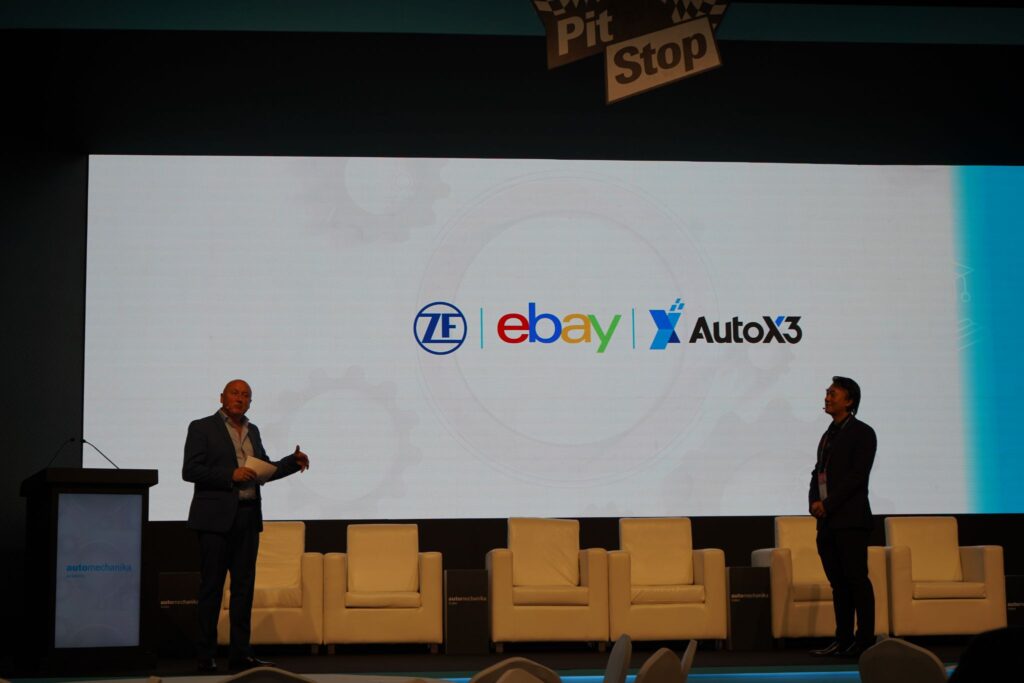
My Automechanika Dubai Experience Told As a Sci-Fi Thriller : Self Driving Vehicles, Online Car Shopping, and Electric Future.

Going to dubai for the Automechanika show was a wonderful experience to say the least. Met loads of great entrepreneurs, brands, and experts in the industry. The whole time I was comparing it to a sci-fi thriller, there is so much to explore and so many innovations to learn about. So here is a quick story that delves to the heart of changes we are experiencing in the automotive world. 

How the Story Goes

Once, a restless traveler, a mechanic, an innovator, or maybe just a dreamer—wandered these halls. Drawn in by the hum of electric motors and the promise of uncharted roads, they came seeking answers.And at first, it was everything they expected: electric cars as quiet as whispers, AI diagnostics smarter than doctors, and sustainability stamped on every display. The traveler marveled at it all—but the deeper they ventured, the more uneasy they became.

The Questions That Haunt

In the middle of the Oracle’s labyrinth, they say, sits a single car—sleek, silent, and waiting. Not a concept, not a display. Something… more. You can approach it, walk around it, even admire the perfect symmetry of its design.

But when you look closely, something feels off.

You notice the absence of pedals and the eerily smooth dash. You realize this car doesn’t need you—it doesn’t want you. It drives itself. It makes its own decisions. And as you stand there, you begin to feel… irrelevant.

The Oracle whispers to you then, not in words, but in thoughts:

What happens to car culture when cars don’t need drivers?

What happens to the thrill of the open road, the roar of the engine, the feeling of control?

And what about those left behind—people who still rely on old machines, who can’t afford this so-called “future”?

The Exit

The traveler, if they are wise, doesn’t linger too long. The Oracle doesn’t offer solutions, only reflections. They leave the halls with their heart racing, their mind spinning.

The legend says you don’t leave unchanged. You carry with you the weight of the questions—questions that will shape the roads ahead:

Are we creating progress for all, or leaving too many in the dust?

Are we driving innovation, or are we being driven by it?And when the future finally arrives, will we still recognize ourselves in it?

So, Do You Dare?

Next time you hear about Automechanika Dubai, remember this: it’s not just a trade show—it’s a place where legends are born and futures collide. Some call it progress. Others call it a warning.

But those who’ve encountered the Oracle know this for sure: the road ahead is uncertain, and it’s up to us to decide where it leads.

The Uni Wheel: Hyundai’s Game-Changing Innovation in Mobility

What if I told you Hyundai has just reimagined something as fundamental as the wheel?  You’d probably raise an eyebrow. A wheel is a wheel, right? But not anymore. Hyundai Motor Group is flipping the script, and their Universal Wheel Drive System (Uni Wheel) is a glimpse into the future of mobility that’s too exciting to ignore.

Let me tell you why this matters.

A Wheel with a Purpose

Think about how far electric vehicles (EVs) have come. They’re already breaking boundaries—simplified drivetrains, more space, better efficiency. But Hyundai saw an opportunity:

What if we could shrink the system even further and make the wheel itself smarter?

The Uni Wheel is more than just a compact wheel drive system—it’s a revolution. By integrating key components like the motor and reducer inside the wheel, Hyundai frees up space like never before. Suddenly, your car interior isn’t just bigger; it’s customizable, flexible, and perfect for the purpose-built vehicles (PBVs) of tomorrow. Delivery robots? Micro-mobility solutions? The Uni Wheel fits them all.

How It Works (And Why It’s Brilliant)

Picture this: the Uni Wheel uses a planetary gear structure—a series of sun gears, ring gears, and pinion gears working together to turn the wheel efficiently. What makes it groundbreaking is its ability to adapt.

Here’s the twist:

• The motor and the wheel’s axes don’t even need to align. That flexibility? It’s huge for space-saving.

• The design lets vehicles adjust their ground clearance dynamically. Imagine a car that raises itself to handle rocky terrain or lowers itself for better aerodynamics on the highway. That’s not just smart—it’s genius.

Why This Changes Everything

Let’s get practical for a second. The Uni Wheel isn’t just an engineering marvel; it’s the kind of innovation that reshapes the entire industry.

More Space: Vehicles become roomier, making them perfect for EVs, PBVs, and even autonomous delivery robots.

Efficiency Meets Safety: Adaptive ground clearance means vehicles are safer, more efficient, and ready for any road condition.

Sustainability: Less material, more efficiency, fewer compromises—Hyundai is doubling down on its commitment to future mobility.

The Bigger Picture

Images. Cho Hyuk-su

This isn’t just about Hyundai. It’s about where the industry is heading. As EVs and autonomous vehicles take center stage, innovations like the Uni Wheel will be the building blocks of a new era. Cars won’t just be tools for transportation—they’ll be spaces designed around us, for us.But here’s the real question: Are we ready for a world where even something as “basic” as the wheel isn’t basic anymore?